
The Heritage of Humanity

Serie 1 · 1519–1520Series 1 · 1519–1520

Die Eroberung der AztekenConquest of the Aztecs

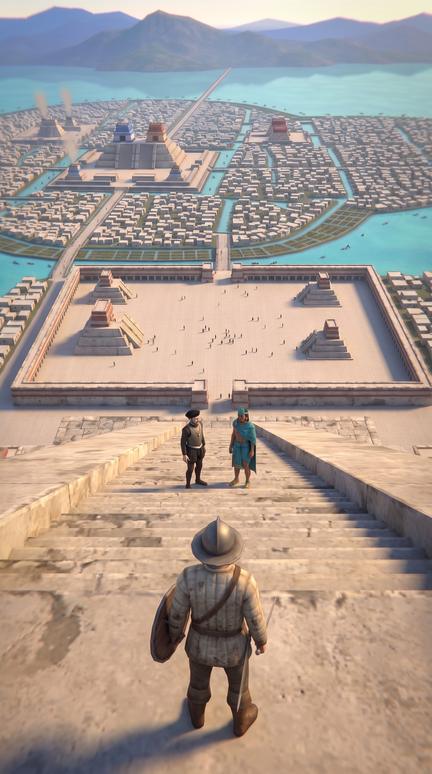
November 1519. Ein paar hundert spanische Soldaten und ihre indigenen Verbündeten steigen aus den Bergen herab und sehen Tenochtitlan: eine Stadt mitten in einem See, vielleicht 200.000 Menschen. Ihr Herrscher lässt sie hinein. Eine Woche später wenden sich die Gäste gegen ihren Gastgeber. Du bist einer dieser Soldaten. Der Mann neben dir, Bernal Díaz, hat alles aufgeschrieben.November 1519. A few hundred Spanish soldiers and their Indigenous allies come down from the mountains and see Tenochtitlan: a city built on a lake, home to maybe 200,000 people. Its ruler invites them in. A week later, the guests turn on their host. You are one of those soldiers. The man beside you, Bernal Díaz, wrote it all down.

Standbild aus Folge 1 / Still from episode 1

FolgeEpisode 011:52

Die Stadt im SeeThe City in the Lake

November 1519 · auf dem Weg aus den Bergen hinunter ins Tal von MexikoNovember 1519 · on the way down from the mountains into the Valley of Mexico

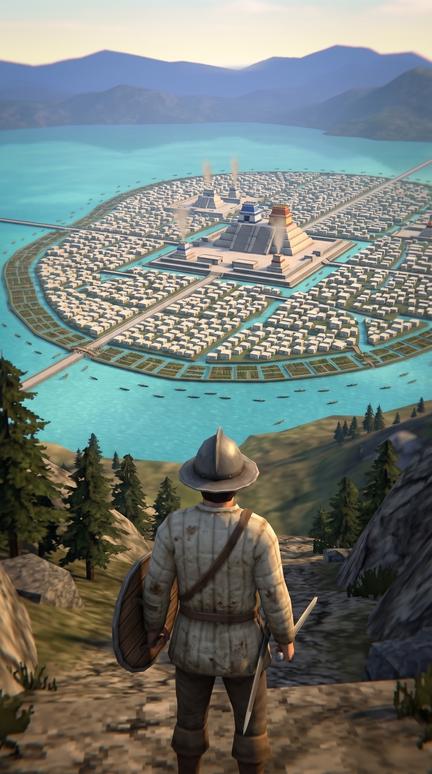
Du bist Mitte zwanzig, hungrig und ziehst mit ein paar hundert Männern über die Berge. Dann geht es bergab, und unter dir liegt eine Stadt mitten in einem See, mit dem Ufer über lange Steindämme verbunden. Manche fragen, ob das alles ein Traum ist.You're in your mid-twenties, hungry, crossing the mountains with a few hundred men. Then the trail drops, and below you lies a city in the middle of a lake, linked to the shore by long stone causeways. Some of the men ask if it's all a dream.

Was das Video weglässtWhat the video leaves out

  • Indigene Verbündete aus Tlaxcala zogen mit den Spaniern.Indigenous allies from Tlaxcala marched with the Spaniards.
  • Heute steht Mexiko-Stadt auf ihren Ruinen.Mexico City stands on the city's ruins today.

Wo Historiker streitenWhere historians disagree

  • Wie viele Menschen lebten in Tenochtitlan? Verbreitete Schätzungen nennen 150.000 bis 250.000, andere halten nur 60.000 bis 80.000 für richtig.How many people lived in Tenochtitlan? Common estimates say 150,000 to 250,000; others argue for only 60,000 to 80,000.
  • Die Opferzahlen im Ausblick (Pocken, Belagerung 1521) sind Schätzungen, die Forschung ist sich uneinig.The death tolls the video looks ahead to (smallpox, the siege of 1521) are estimates; historians disagree.

QuellenSources

  • Bernal Díaz del Castillo, Wahrhafte Geschichte der Eroberung von Neuspanien (Kap. 86)Bernal Díaz del Castillo, The True History of the Conquest of New Spain (ch. 86)
  • Hernán Cortés, Zweiter Brief an Karl V.Hernán Cortés, Second Letter to Charles V
  • Florentiner Codex, Buch 12Florentine Codex, Book 12
Standbild aus Folge 2 / Still from episode 2

FolgeEpisode 022:20

Der Gast des KaisersThe Emperor's Guest

8. November 1519 · Einzug über den Steindamm nach Tenochtitlan, vier Tage später auf einem Tempel mit 114 Stufen8 November 1519 · entering Tenochtitlan over the causeway, four days later on a temple with 114 steps

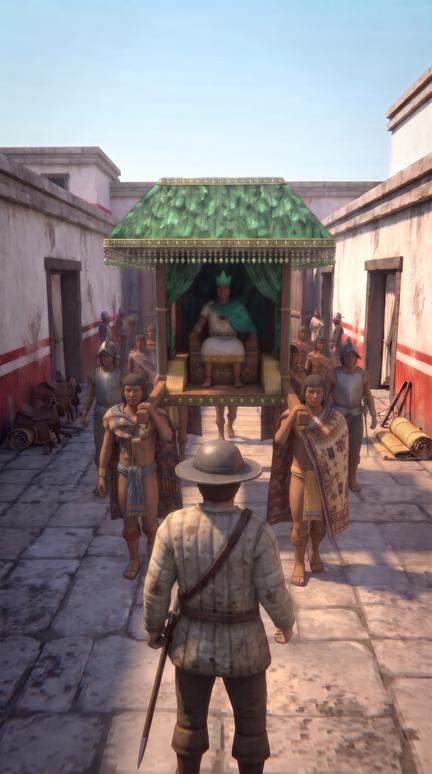
Moctezuma kommt dir entgegen, getragen unter einem Dach aus grünen Federn, und niemand darf ihm ins Gesicht sehen. Er bringt euch in einem Palast unter und sagt, ihr sollt euch wie zu Hause fühlen, und ihr stellt eure Kanonen auf. Vier Tage später siehst du oben vom Tempel die Holzbrücken, die man aus den Dämmen nehmen kann, und dein General will ein Kreuz in Moctezumas Schrein stellen.Moctezuma comes out to meet you, carried under a canopy of green feathers, and nobody may look him in the face. He houses you in a palace and tells you to feel at home, and you set up your cannons. Four days later, from the top of a temple, you see the wooden bridges that can be pulled out of the causeways, and your general asks to put a cross in Moctezuma's shrine.

Was das Video weglässtWhat the video leaves out

  • Moctezumas Mahlzeiten mit Hunderten Gerichten hinter einem vergoldeten Wandschirm.Moctezuma's meals, with hundreds of dishes served behind a gilded screen.
  • Sein Tiergehege mit Raubkatzen und Schlangen.His zoo with big cats and snakes.

Wo Historiker streitenWhere historians disagree

  • Welcher Tempel hatte die 114 Stufen? Díaz nennt Tlatelolco; ob er ihn mit dem Großen Tempel von Tenochtitlan verwechselt, ist offen. Das Video nennt keinen Namen.Which temple had the 114 steps? Díaz places it at Tlatelolco; whether he mixed it up with the Great Temple of Tenochtitlan is an open question. The video names no temple.
  • Hat Moctezuma in seiner Begrüßung sein Reich übergeben? Cortés und der Florentiner Codex legen es nahe. Manche Historiker sehen darin heute eine Missdeutung höflicher Nahuatl-Rede oder eine spätere Konstruktion.Did Moctezuma hand over his empire in his welcome speech? Cortés and the Florentine Codex suggest it. Some historians today see a misreading of polite Nahuatl speech, or a later construction.

QuellenSources

  • Bernal Díaz del Castillo, Wahrhafte Geschichte der Eroberung von Neuspanien (Kap. 88–93)Bernal Díaz del Castillo, The True History of the Conquest of New Spain (ch. 88–93)
  • Florentiner Codex, Buch 12Florentine Codex, Book 12
Standbild aus Folge 3 / Still from episode 3

FolgeEpisode 032:51

Die vermauerte TürThe Bricked-Up Door

November 1519 · im Palast von Moctezumas totem Vater, mitten in TenochtitlanNovember 1519 · in the palace of Moctezuma's dead father, in the heart of Tenochtitlan

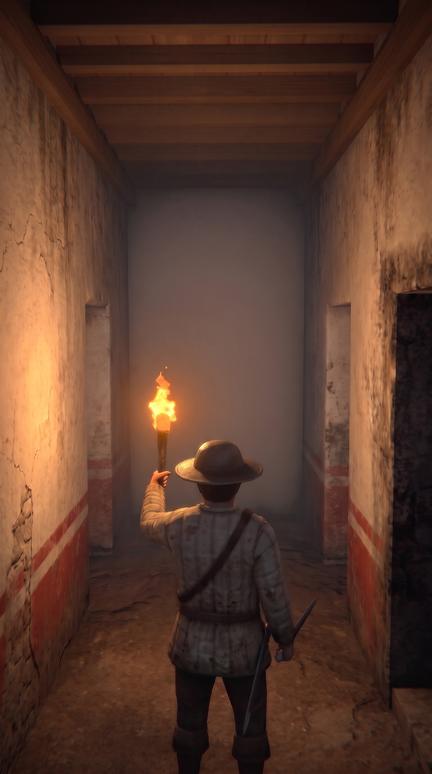
Ein Zimmermann findet in einer Wand die Spur einer Tür, sorgfältig zugemauert und verputzt. Dahinter liegt der Schatz des toten Königs; ihr mauert sie wieder zu und sagt eurem Gastgeber nichts. Dann wird das Essen knapper, jeder Weg hinaus ist eine Brücke, und eure Hauptleute haben eine Idee: den Kaiser festnehmen.A carpenter finds the trace of a door in a wall, carefully bricked up and plastered over. Behind it lies the dead king's treasure; you brick it up again and tell your host nothing. Then the food gets scarcer, every way out is a bridge, and your captains have an idea: take the emperor prisoner.

Was das Video weglässtWhat the video leaves out

  • Die Spanier bauten mit Moctezumas Erlaubnis eine Kapelle in ihrem Quartier und hielten dort die Messe.The Spaniards built a chapel in their quarters with Moctezuma's permission and held Mass there.

Wo Historiker streitenWhere historians disagree

  • Wann kam die schlechte Nachricht von der Küste? Laut Díaz genau an diesem Morgen. Cortés schrieb dem König, er habe den Brief schon Wochen vorher in Cholula erhalten und erst später als Anlass genommen. Einer von beiden sagt nicht die Wahrheit.When did the bad news from the coast arrive? Díaz says the letter came that very morning. Cortés wrote to the king that he had it weeks earlier, in Cholula, and used it later as a reason. One of them isn't telling the truth.
  • Díaz schreibt, man habe die Spanier „teules“ genannt, Götter oder Geister. Historiker bezweifeln heute, dass die Mexica das je wirklich glaubten.Díaz writes that people called the Spaniards “teules”, gods or spirits. Historians today doubt the Mexica ever really believed that.

QuellenSources

  • Bernal Díaz del Castillo, Wahrhafte Geschichte der Eroberung von Neuspanien (Kap. 85, 93–95)Bernal Díaz del Castillo, The True History of the Conquest of New Spain (ch. 85, 93–95)
  • Hernán Cortés, Zweiter Brief an Karl V. (1520)Hernán Cortés, Second Letter to Charles V (1520)
Standbild aus Folge 4 / Still from episode 4

FolgeEpisode 042:55

Der BesuchThe Visit

November 1519 · rund eine Woche nach dem Einzug, in Moctezumas PalastNovember 1519 · about a week after the entry, in Moctezuma's palace

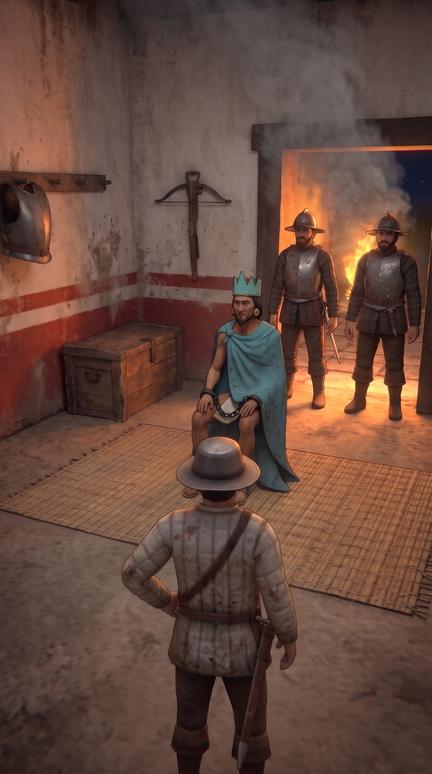
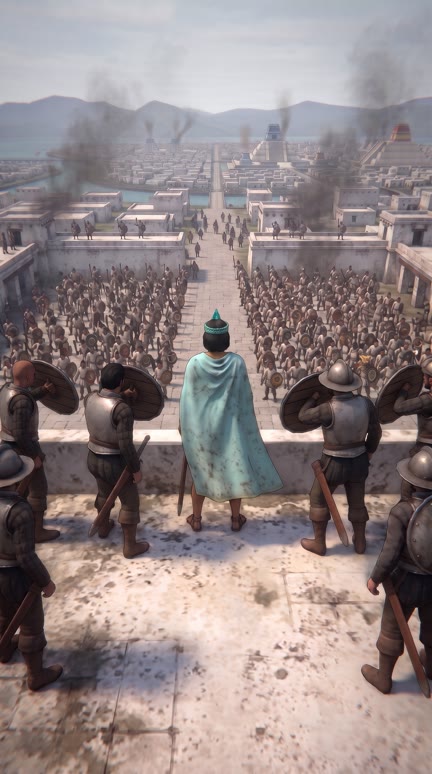
Eine Woche lang war Moctezuma euer Gastgeber. Dann kommen dein General und fünf Hauptleute in voller Rüstung, um ihn zu „besuchen“. Die Drohung: Komm mit, und wenn du nach deinen Wachen rufst, bist du ein toter Mann. Der mächtigste Mann des Landes bietet seine eigenen Kinder als Geiseln an, nur damit man ihn nicht entehrt.For a week, Moctezuma has been your host. Then your general and five captains, in full armor, come to “visit” him. The threat: come with us, and if you call your guards, you're a dead man. The most powerful man in the land offers his own children as hostages, just so he won't be shamed.

Was das Video weglässtWhat the video leaves out

  • Moctezumas Alltag im Quartier der Spanier: Er regierte dort weiter, mit Dienern, Räten und Fürsten, die barfuß kamen und sich verbeugten.Moctezuma's daily life in the Spanish quarters: he kept ruling there, with servants, councillors and nobles who came barefoot to bow before him.
  • Die Verbrennung seiner Feldherren vor dem Palast. Damit beginnt Folge 5.The burning of his generals in front of the palace. It opens Episode 5.

Wo Historiker streitenWhere historians disagree

  • Drei Fassungen desselben Morgens. Bernal Díaz: eine Woche nach dem Einzug, durch Drohung. Die Mexica-Zeugen im Florentiner Codex: schon am ersten Tag gepackt. Der Historiker Matthew Restall: Er war nie wirklich ihr Gefangener; sie waren seine.Three versions of the same morning. Bernal Díaz: taken a week after the arrival, by threat. The Mexica witnesses in the Florentine Codex: seized on the very first day. Historian Matthew Restall: he was never really their prisoner; they were his.
  • War Díaz selbst im Raum? Manche spanischen Ausgaben seines Buchs sagen ja, andere nennen ihn nicht.Was Díaz himself in the room? Some Spanish editions of his book say so, others don't.
  • Malintzins Rat an Moctezuma („geh ohne Lärm mit, sonst stirbst du hier“) kennen wir nur von Díaz.Malintzin's advice to Moctezuma (“go with them quietly, or you will die here”) is known only from Díaz.

QuellenSources

  • Bernal Díaz del Castillo, Wahrhafte Geschichte der Eroberung von Neuspanien (Kap. 95)Bernal Díaz del Castillo, The True History of the Conquest of New Spain (ch. 95)
  • Florentiner Codex, Buch 12 (Kap. 17)Florentine Codex, Book 12 (ch. 17)
  • Matthew Restall, When Montezuma Met Cortés (2018) (bisher über Besprechungen)Matthew Restall, When Montezuma Met Cortés (2018) (so far via reviews)
Standbild aus Folge 5 / Still from episode 5

FolgeEpisode 053:09

Der Kaiser im KäfigThe Emperor in the Cage

Winter 1519 bis April 1520 · rund fünf Monate im Quartier der Spanier in TenochtitlanWinter 1519 to April 1520 · about five months in the Spanish quarters in Tenochtitlan

Fünf Monate lang bewachst du den mächtigsten Mann des Landes. Er lernt eure Namen, spielt mit euch um kleine Goldkugeln und lächelt, als Alvarado schummelt. Er übergibt euch sogar seinen eigenen Neffen, der ein Heer aufgestellt hat, um ihn zu befreien. Dann wollen seine Götter Krieg, und achtzehn spanische Schiffe kommen, geschickt, um deinen General festzunehmen.For five months you guard the most powerful man in the land. He learns your names, plays with you for little gold balls and smiles when Alvarado cheats. He even hands over his own nephew, who raised an army to free him. Then his gods want war, and eighteen Spanish ships arrive, sent to arrest your general.

Was das Video weglässtWhat the video leaves out

  • Moctezuma schenkte den Spaniern Frauen, dazu Gold und Stoffe.Moctezuma gave the Spaniards women, along with gold and cloth.
  • Cortés spielte ein doppeltes Spiel: Heimlich ließ er Moctezuma ausrichten, er würde ihn freilassen, aber seine Hauptleute ließen ihn nicht.Cortés played a double game: he secretly told Moctezuma he would free him, but his officers wouldn't let him.
  • Die Segelschiffe: Cortés ließ zwei kleine Brigantinen bauen, Moctezuma gegenüber „Vergnügungsjachten“. Moctezuma fuhr damit zur Jagd über den See, und als der Wind kam, hängten die Segel jedes Kanu ab. Er freute sich sehr. Für die Spanier waren die Schiffe ein Fluchtweg, falls die Brücken fallen. Ihr Baumeister Martín López baute ein Jahr später dreizehn davon, und mit ihnen wurde die Stadt erobert.The sailing ships: Cortés had two small brigantines built, “pleasure yachts” as he told Moctezuma. Moctezuma went hunting on the lake in them, and when the wind rose, the sails left every canoe behind. He was delighted. For the Spaniards, the ships were an escape route in case the bridges fell. Their builder, Martín López, built thirteen of them a year later, and with them the city was taken.
  • Der Zweifel an der „Prophezeiung“, siehe „Wo Historiker streiten“.The doubt about the “prophecy”: see “Where historians disagree”.

Wo Historiker streitenWhere historians disagree

  • Beim Treueschwur sprach Moctezuma laut Díaz von einer Überlieferung: Menschen aus dem Osten würden das Land beherrschen. Viele Historiker halten diese „Prophezeiung“ für eine spätere spanische Erzählung. Sicher bei Díaz: Alle weinten, Moctezuma, seine Fürsten und auch viele Spanier.At the oath of loyalty, Díaz says Moctezuma spoke of an old tradition of people from the east who would rule the land. Many historians today think this “prophecy” is a later Spanish story. What Díaz does say for certain: everyone wept, Moctezuma, his nobles and many Spaniards too.

Zwei SeitenTwo sides

  • Derselbe Schatz, zwei Blicke: Díaz zählt Gold für über 600.000 Pesos. Die Mexica erinnern sich, wie die Spanier das Gold von Federschilden rissen und den Rest verbrannten.The same treasure, seen twice: Díaz counts gold worth over 600,000 pesos. The Mexica remember the Spaniards tearing the gold off feather shields and burning the rest.

QuellenSources

  • Bernal Díaz del Castillo, Wahrhafte Geschichte der Eroberung von Neuspanien (Kap. 95–110)Bernal Díaz del Castillo, The True History of the Conquest of New Spain (ch. 95–110)
  • Florentiner Codex, Buch 12 (Kap. 17)Florentine Codex, Book 12 (ch. 17)
Standbild aus Folge 6 / Still from episode 6

FolgeEpisode 063:02

Brüder gegen BrüderBrothers Against Brothers

Mai 1520 · Cempoala an der Golfküste, und zur selben Zeit TenochtitlanMay 1520 · Cempoala on the Gulf coast, and back in Tenochtitlan

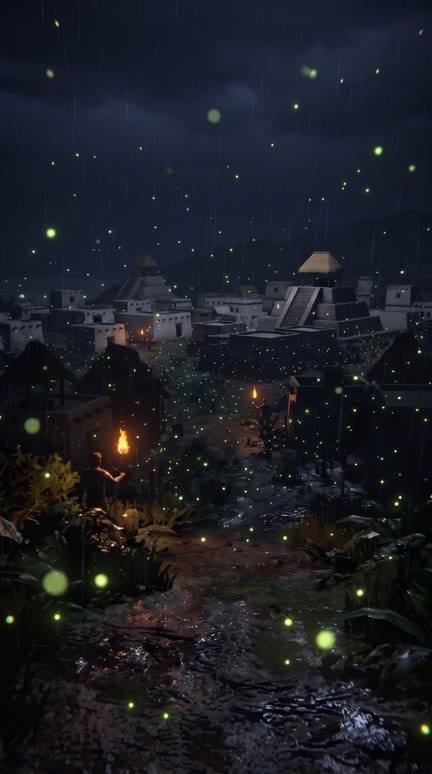
Achtzehn Schiffe voller Spanier, geschickt, um deinen General festzunehmen. Er lässt keine hundert Mann bei Alvarado in der Stadt und zieht mit dem Rest zur Küste. Statt zu kämpfen, kauft er die Gegner mit Gold. In einer Regennacht leuchten Glühwürmchen, und der Feind hält sie für eure Gewehre. Ihr gewinnt. Dann kommen vier weinende Adlige aus der Stadt und erzählen, was dort beim Fest passiert ist.Eighteen ships full of Spaniards, sent to arrest your general. He leaves not even a hundred men with Alvarado in the city and marches to the coast with the rest. Instead of fighting, he buys the enemy with gold. On a rainy night, fireflies glow, and the enemy takes them for your guns. You win. Then four nobles arrive from the city, in tears, and tell what happened at the festival.

Was das Video weglässtWhat the video leaves out

  • Das Gold brachte Pater Bartolomé de Olmedo heimlich in Narváez' Lager. Die ersten Offiziere liefen aber vor allem über, weil Narváez einen königlichen Richter in Ketten legen ließ.The gold was smuggled into Narváez's camp by the priest Bartolomé de Olmedo. But the first officers came over mainly because Narváez had a royal judge put in chains.
  • Das Massaker war etwa eine Woche vor der Nacht in Cempoala (um den 20.–22. Mai 1520). Du erfährst es erst danach.The massacre happened about a week before the night at Cempoala (around 20–22 May 1520). You only learn of it afterwards.
  • Mit Narváez' Flotte kamen auch die Pocken ins Land.Narváez's fleet also brought smallpox.

Wo Historiker streitenWhere historians disagree

  • Warum das Massaker beim Fest Toxcatl? Alvarado sagte, die Mexica hätten ihn nach dem Fest angreifen wollen. Cortés glaubte ihm nicht. Andere sagten, er wollte den Goldschmuck der Tänzer.Why the massacre at the feast of Toxcatl? Alvarado said the Mexica planned to attack him after the feast. Cortés didn't believe him. Others said he wanted the dancers' gold jewelry.
  • Wer wollte das Fest? Laut Díaz baten die Mexica, und Alvarado erlaubte es. Laut Florentiner Codex wollte Alvarado es sehen.Who wanted the feast? Díaz says the Mexica asked and Alvarado allowed it. The Florentine Codex says Alvarado asked to see it.
  • Wie viele starben, weiß niemand. Die Schätzungen reichen von rund 400 Adligen bis zu mehreren Tausend.Nobody knows how many died. Estimates range from about 400 nobles to several thousand.

Zwei SeitenTwo sides

  • Díaz war an der Küste, nicht beim Fest. Deshalb erzählt die Folge das Massaker so, wie die Mexica es im Florentiner Codex erinnern: die vier Tore, die unbewaffneten Tänzer, zuerst die Trommler.Díaz was on the coast, not at the feast. So the episode tells the massacre as the Mexica remember it in the Florentine Codex: the four gates, the unarmed dancers, the drummers first.

QuellenSources

  • Bernal Díaz del Castillo, Wahrhafte Geschichte der Eroberung von Neuspanien (Kap. 109–125)Bernal Díaz del Castillo, The True History of the Conquest of New Spain (ch. 109–125)
  • Florentiner Codex, Buch 12 (Kap. 19–22)Florentine Codex, Book 12 (ch. 19–22)
Standbild aus Folge 7 / Still from episode 7

FolgeEpisode 073:10

Die stille StadtThe Silent City

24.–30. Juni 1520 · Tenochtitlan24–30 June 1520 · Tenochtitlan

Ihr marschiert zurück in eine Stadt mit vielleicht zweihunderttausend Menschen, und niemand macht einen Laut. Kein Markt, kein Essen. Dein General nennt den Kaiser einen Hund, die Boten hören jedes Wort. Eine Viertelstunde später regnet es Steine. Am Ende soll Moctezuma auf dem Dach sein Volk beruhigen. Für einen Moment wird es still.You march back into a city of maybe two hundred thousand people, and nobody makes a sound. No market, no food. Your general calls the emperor a dog, and the messengers hear every word. Fifteen minutes later, stones fall like rain. In the end, Moctezuma is sent up on the roof to calm his people. For a moment, it goes quiet.

Was das Video weglässtWhat the video leaves out

  • Die Spanier stürmen den Großen Tempel, wo sie einst ein Marienbild aufgestellt hatten. Es ist weg. Sie verbrennen die Götterfiguren und werden zurückgedrängt. Díaz zählt 46 Tote.The Spaniards storm the Great Temple, where they once set up an image of the Virgin. It is gone. They burn the idols and are driven back down. Díaz counts 46 dead.
  • Laut Florentiner Codex warfen die Spanier den Leichnam am Wasser bei Teoayoc hinaus. In Copulco wurde er verbrannt, und manche beschimpften ihn noch.According to the Florentine Codex, the Spaniards threw the body out by the water at Teoayoc. It was burned at Copulco, and some still cursed him.
  • Oft erzählt, aber weder bei Díaz noch bei Cortés: Cortés habe Moctezumas Bruder Cuitláhuac freigelassen, damit der Markt wieder öffnet.Often told, but found neither in Díaz nor in Cortés: that Cortés freed Moctezuma's brother Cuitláhuac to reopen the market.

Wo Historiker streitenWhere historians disagree

  • Wer hat Moctezuma getötet? Die Spanier sagen: Steine seiner eigenen Leute. Indigene Berichte sagen: die Spanier, erstochen (Durán) oder erwürgt. Die Forschung hat es nicht entschieden.Who killed Moctezuma? The Spaniards say: his own people's stones. Indigenous accounts say: the Spaniards, stabbed (Durán) or strangled. Historians have not settled it.
  • Wer schickte ihn aufs Dach? Laut Díaz bat Cortés ihn darum. Cortés schreibt, Moctezuma habe selbst darum gebeten.Who sent him onto the roof? Díaz says Cortés asked him. Cortés writes that Moctezuma asked to go up himself.

Zwei SeitenTwo sides

  • Die Mexica sagten später, sie versteckten sich beim Einzug absichtlich, damit jeder sieht: Nicht wir haben diesen Krieg begonnen. Díaz war nicht im Raum, als Moctezuma starb.The Mexica later said they hid on purpose when the Spaniards marched in, so everyone could see: we did not start this war. Díaz was not in the room when Moctezuma died.

QuellenSources

  • Bernal Díaz del Castillo, Wahrhafte Geschichte der Eroberung von Neuspanien (Kap. 125–128)Bernal Díaz del Castillo, The True History of the Conquest of New Spain (ch. 125–128)
  • Hernán Cortés, Zweiter Brief an Karl V. (1520)Hernán Cortés, Second Letter to Charles V (1520)
  • Francisco López de Gómara, Historia de la conquista de México (Kap. 106–107)Francisco López de Gómara, Historia de la conquista de México (ch. 106–107)
  • Florentiner Codex, Buch 12 (Kap. 21–23)Florentine Codex, Book 12 (ch. 21–23)
Standbild aus Folge 8 / Still from episode 8

FolgeEpisode 083:13

La Noche TristeLa Noche Triste

Nacht zum 1. Juli 1520 · TenochtitlanNight of 30 June 1520 · Tenochtitlan

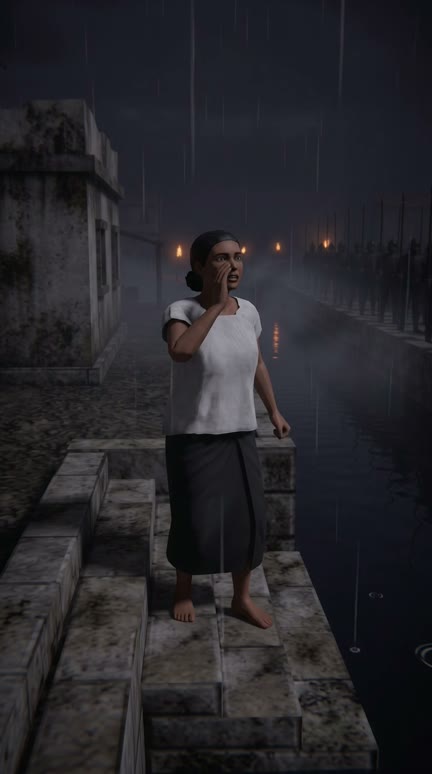
Mitternacht. Dein General öffnet die Schatzkammer: Nehmt, was ihr tragen könnt. Dann flieht ihr über den Damm, mit einer tragbaren Brücke für die Lücken. Eine Frau beim Wasserholen sieht euch und schreit. Pferde rutschen auf den nassen Balken aus, die Brücke stürzt ins Wasser. Wer Gold trägt, kann nicht schwimmen. Der Mann neben dir hat nur vier grüne Steine genommen.Midnight. Your general opens the treasure room: take whatever you can carry. Then you flee across the causeway, with a portable bridge for the gaps. A woman fetching water sees you and screams. Horses slip on the wet beams, and the bridge falls into the water. Whoever carries gold can't swim. The man next to you took only four green stones.

Was das Video weglässtWhat the video leaves out

  • Der berühmte „Sprung des Alvarado“ über einen Kanal: Díaz stand ein Jahr später an dieser Stelle und glaubte nicht daran.The famous "leap of Alvarado" across a canal: Díaz stood at that spot a year later and did not believe it.
  • Cortés kehrte um und weinte, als er hörte, wie viele fehlten. Der Baum, unter dem er geweint haben soll, ist spätere Legende.Cortés turned back and wept when he heard how many were missing. The tree he is said to have cried under is later legend.
  • Auch Moctezumas eigene Kinder starben in dieser Nacht, dazu die meisten einheimischen Frauen im Tross. Malintzin überlebte. Botello, der Sterndeuter, nicht.Moctezuma's own children died that night too, and most of the native women with the Spaniards. Malintzin survived. Botello, the stargazer, did not.
  • Im Herbst ging eine Pockenseuche durch die Stadt. Der neue König Cuitláhuac starb daran. Im April 1521 liefen dreizehn neue Brigantinen vom Stapel, gebaut von Martín López.That autumn, smallpox swept the city. The new king Cuitláhuac died of it. In April 1521, thirteen new brigantines were launched, built by Martín López.

Wo Historiker streitenWhere historians disagree

  • Wie viele starben? Díaz nennt über 870 Spanier und 1.200 Tlaxcalteken in fünf Tagen, die Schlacht von Otumba mitgezählt. Cortés nennt viel weniger. Genau weiß es niemand.How many died? Díaz gives over 870 Spaniards and 1,200 Tlaxcalans in five days, including the battle of Otumba. Cortés gives far fewer. Nobody knows exactly.

Zwei SeitenTwo sides

  • Laut Florentiner Codex schlug eine Frau beim Wasserholen Alarm. Am Morgen holten die Mexica Schwerter, Pferde und Gold aus den Kanälen. Díaz schreibt, die meisten von Narváez' Leuten starben, beschwert vom Gold. Nicht nur sie.According to the Florentine Codex, a woman fetching water raised the alarm. In the morning, the Mexica pulled swords, horses and gold out of the canals. Díaz writes that most of Narváez's men died, weighed down by gold. Not only they.

QuellenSources

  • Bernal Díaz del Castillo, Wahrhafte Geschichte der Eroberung von Neuspanien (Kap. 98–99, 128)Bernal Díaz del Castillo, The True History of the Conquest of New Spain (ch. 98–99, 128)
  • Hernán Cortés, Zweiter Brief an Karl V. (1520)Hernán Cortés, Second Letter to Charles V (1520)
  • Florentiner Codex, Buch 12 (Kap. 24–25, 29)Florentine Codex, Book 12 (ch. 24–25, 29)

QuellenSources

Worauf diese Serie stehtWhat this series stands on

Quellen aus der ZeitPrimary sources

  • Bernal Díaz del Castillo, Historia verdadera de la conquista de la Nueva España (geschrieben etwa 1550er bis 1568, gedruckt 1632). Englisch: The True History of the Conquest of New Spain, übers. Lockhart (1844).Augenzeuge, schrieb aber 30 bis 50 Jahre später und mit eigenen Interessen.Bernal Díaz del Castillo, Historia verdadera de la conquista de la Nueva España (written c. 1550s–1568, printed 1632). English: The True History of the Conquest of New Spain, trans. Lockhart (1844).Eyewitness, but writing 30 to 50 years later, with his own interests.
  • Hernán Cortés, Segunda carta de relación, Zweiter Brief an Karl V. (30. Oktober 1520).Eine Rechtfertigung, geschrieben an den König.Hernán Cortés, Segunda carta de relación, Second Letter to Charles V (30 October 1520).A justification written to the king.
  • Bernardino de Sahagún, Florentiner Codex, Buch 12 (Nahuatl, etwa 1555 bis 1577).Die Seite der Mexica, eine Generation später aufgeschrieben, vor allem nach Zeugen aus Tlatelolco, unter Aufsicht von Franziskanern.Bernardino de Sahagún, Florentine Codex, Book 12 (Nahuatl, c. 1555–1577).The Mexica side, written down a generation later, mainly from witnesses in Tlatelolco, under Franciscan supervision.

ForschungResearch

  • Matthew Restall, When Montezuma Met Cortés (2018).Bisher über Besprechungen.Matthew Restall, When Montezuma Met Cortés (2018).So far via reviews.

Zahlen in dieser Serie sind Schätzungen, die Forschung ist sich uneinig. Wo sich die Quellen widersprechen, sagen wir es.Numbers in this series are estimates; historians disagree. Where the sources contradict each other, we say so.

So arbeiten wirHow we work →